Choosing a summer camp for an active kid is not about glossy brochures, Instagram photos, or buzzwords like “holistic development.” It’s about energy management, skill growth, and safety. Pick the wrong camp and your child will be bored, frustrated, or worse, sidelined with injuries. Pick the right one, and you get confidence, discipline, and real physical development.
This guide breaks down exactly what to look for in a fitness and mindfulness summer camp: scheduling, staff qualifications, programming structure, and the red flags that should make you walk away.
Why “Active Kid” Doesn’t Mean “Sports Camp”

Most parents default to sport-specific camps for high-energy kids. That can backfire. A kid who needs to move all day doesn’t necessarily want to do the same sport for eight hours straight.
A 2025 review in PMC covering dozens of studies on youth sport participation found that multisport athletes showed better gross motor coordination, higher physical activity levels as adolescents, and longer athletic careers compared to early single-sport specializers. Early specialization limits broad motor development. Diverse movement builds well-rounded physical skills.
What works better for active kids is multi-activity programming: rotating through different movement types throughout the day. Fitness games, yoga, team challenges, and guided cooldowns. This is the same principle behind after-school fitness programs that keep kids engaged year-round rather than burning out on a single activity.
What to Look for in the Daily Schedule
Ask for the hour-by-hour schedule. Not the marketing version. The real one.
Active blocks of at least 45 minutes. Fifteen minutes of kickball between transitions isn’t enough for a kid who needs sustained movement.
At least three movement types per day. Running-based games, bodyweight exercises, balance and flexibility work, and cooperative challenges. Variety prevents active kids from checking out.
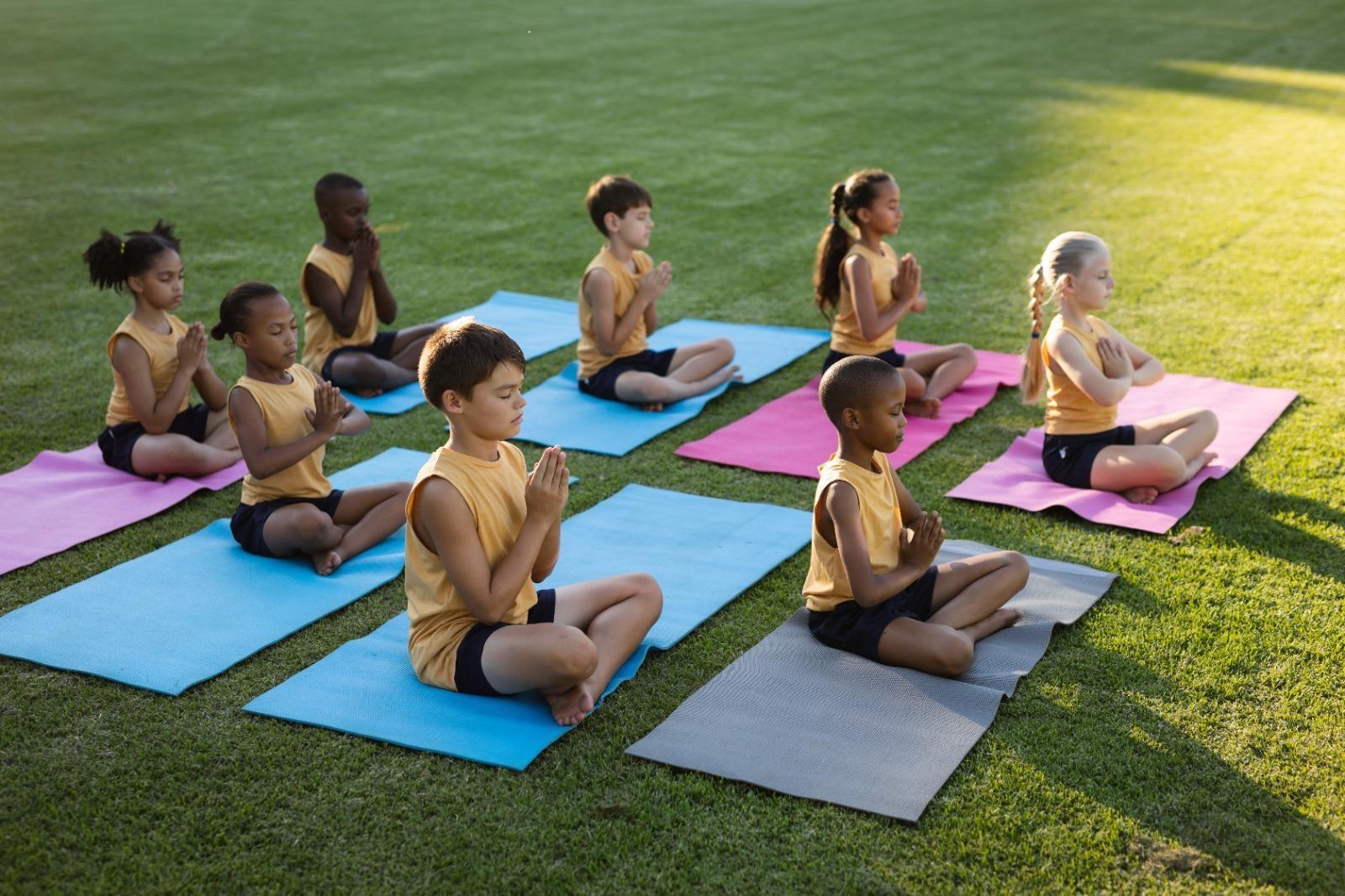
Structured recovery time. “Free time” isn’t recovery. Yoga, guided breathing, or stretching gives kids a way to come down from high energy without just being told to sit and be quiet.
Outdoor time. Plenty of day camps spend most hours inside a gym or cafeteria. The CDC recommends at least 60 minutes of moderate-to-vigorous physical activity per day for kids ages 6 to 17. Outdoor environments encourage more vigorous movement than indoor spaces.
If the schedule says “morning activities” and “afternoon fun” without specifics, that’s a red flag. Good camps are specific because they’ve planned the day.
Questions to Ask Before Signing Up
You’ll ask about the counselor-to-kid ratio and drop-off times. Those matters. These questions matter more for an active child.
What’s the Instructor’s Fitness Background?
There’s a big difference between a college student who played club soccer and a trained kids’ fitness coach who understands developmental stages. At Yous, coaches are trained in the Fitfulness curriculum, which adapts activities by age group: toddlers (ages 1 to 3), preschoolers (3 to 5), early elementary (5 to 7), and upper elementary (8 to 10). A game that works for a 9-year-old could frustrate or injure a 5-year-old.
Ask about training. Ask about certifications. Ask whether staff have CPR and First Aid credentials.
How Do You Handle High-Energy Kids?
Your active kid will finish every activity first and then not know what to do with themselves. The best camps channel that energy: escalation activities for fast finishers, leadership roles for movement-hungry kids, no timeouts for having energy.
If a camp director can’t describe their approach to high-energy kids without the word “consequences,” keep looking.
Is There a Mindfulness or Cooldown Component?
Kids who learn to shift between high energy and calm focus are the ones who thrive long-term. A camp that pairs structured fitness with yoga and meditation teaches your child to regulate their own energy, not just burn it off.
How Do I Choose a Summer Camp for an Active Child?

Match the camp to your child’s specific profile.
Competition-driven kids: Camps with game-based fitness and team challenges. Make sure there’s also a non-competitive element so movement isn’t always about winning.
Active but hates organized sports: More common than people think. Look at general fitness camps, obstacle courses, martial arts-inspired movement, or yoga-based programs. Healthy kids programs that combine fitness with mindfulness give these kids a structured outlet without forcing a ball into their hands.
Active and anxious: High energy and anxiety overlap more than most parents expect. Look for camps combining physical activity with calming techniques. Programs built around a fitness-then-yoga-then-meditation sequence work well because they raise the heart rate, then bring it down with intention.
Young and can’t stop moving (ages 4 to 6): Ask how they modify activities for younger children. At this age, physical literacy (coordination, balance, spatial awareness) matters more than performance. A camp running the same program for all ages is a problem.
Summer Camps in Philadelphia: What to Consider

Some Philadelphia neighborhoods have easy access to outdoor park space (Rittenhouse Square, Fairmount Park, the Schuylkill River Trail), while others are more limited, making a camp’s indoor programming more important.
A camp near Rittenhouse Square will have different logistics than one in Fishtown. Proximity matters when you’re juggling drop-off and pickup all summer.
Red Flags to Watch For
“We keep kids busy all day.” Busy isn’t active. Busy can mean standing in line. Active means structured, coached movement with purpose.
No outdoor component. Active kids need open space to run at full speed.
Untrained counselors. Ask specifically about staff qualifications, certifications, and training before you sign up. If they can’t tell you what training their coaches have completed, that tells you enough.
No cooldown structure. Going from full-speed games to “sit down for a movie” skips a step. Active kids need to learn how to transition between states.
One-size-fits-all programming. If every kid from age 4 to 14 does the same activities at the same intensity, that’s not a program.
What a Good Fitness Camp Actually Builds

A fitness-focused summer camp vs. a traditional day camp comes down to intentional structure. Programs that combine cross-training, yoga, and meditation build three things at once: cardiovascular endurance and coordination through fitness games, flexibility and body awareness through yoga, and emotional regulation and focused attention through meditation. That’s the same approach behind kids fitness and mindfulness training year-round.
That progression (high intensity, then recovery, then stillness) follows a basic principle in exercise science: the body and brain adapt best when exertion is followed by structured recovery.
Your active child doesn’t need a camp that tolerates their energy. They need one designed for it. Start asking these questions now, before the programs with trained staff and real schedules fill up.