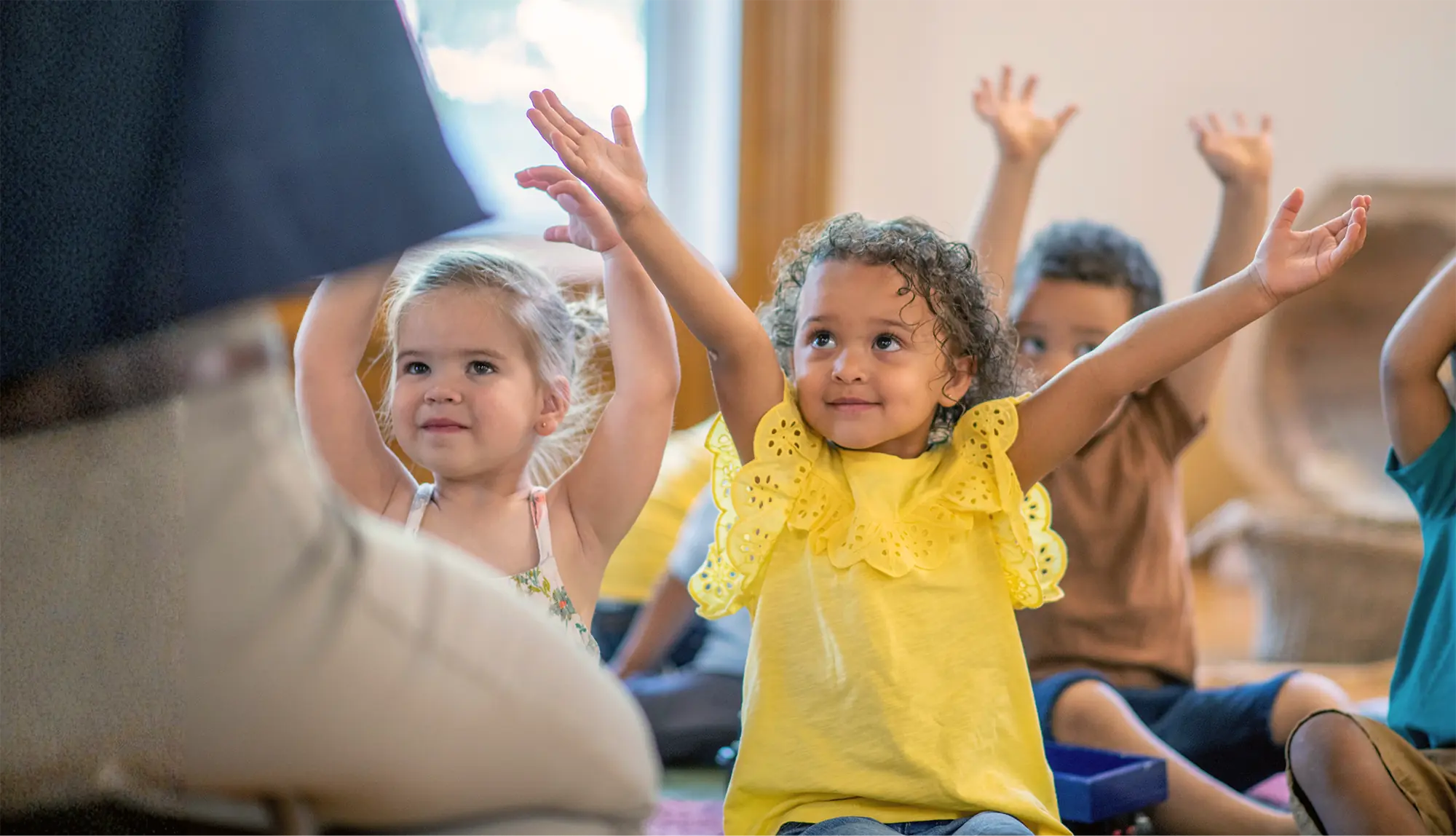
Most summer camp websites show you a photo gallery and a bullet list of activities. Nice, but useless for the question you actually have: what will my kid do all day?
That’s a fair question. You’re handing your child over for six to eight hours. You want to know more than “arts and crafts” and “outdoor play.” You want to understand the structure, the pacing, the thinking behind the daily camp schedule, and whether your kid will come home happy-tired instead of bored-tired.
At summer camp program in Philadelphia, every single day follows a specific summer camp routine built on a simple idea: move the body first, then calm the mind. Fitness games come before yoga. Yoga comes before meditation. That order isn’t random. It’s based on how kids’ nervous systems actually work.
Here’s what a full day looks like, hour by hour.
Morning Drop-Off and Check-In (8:30 to 9:00 AM)
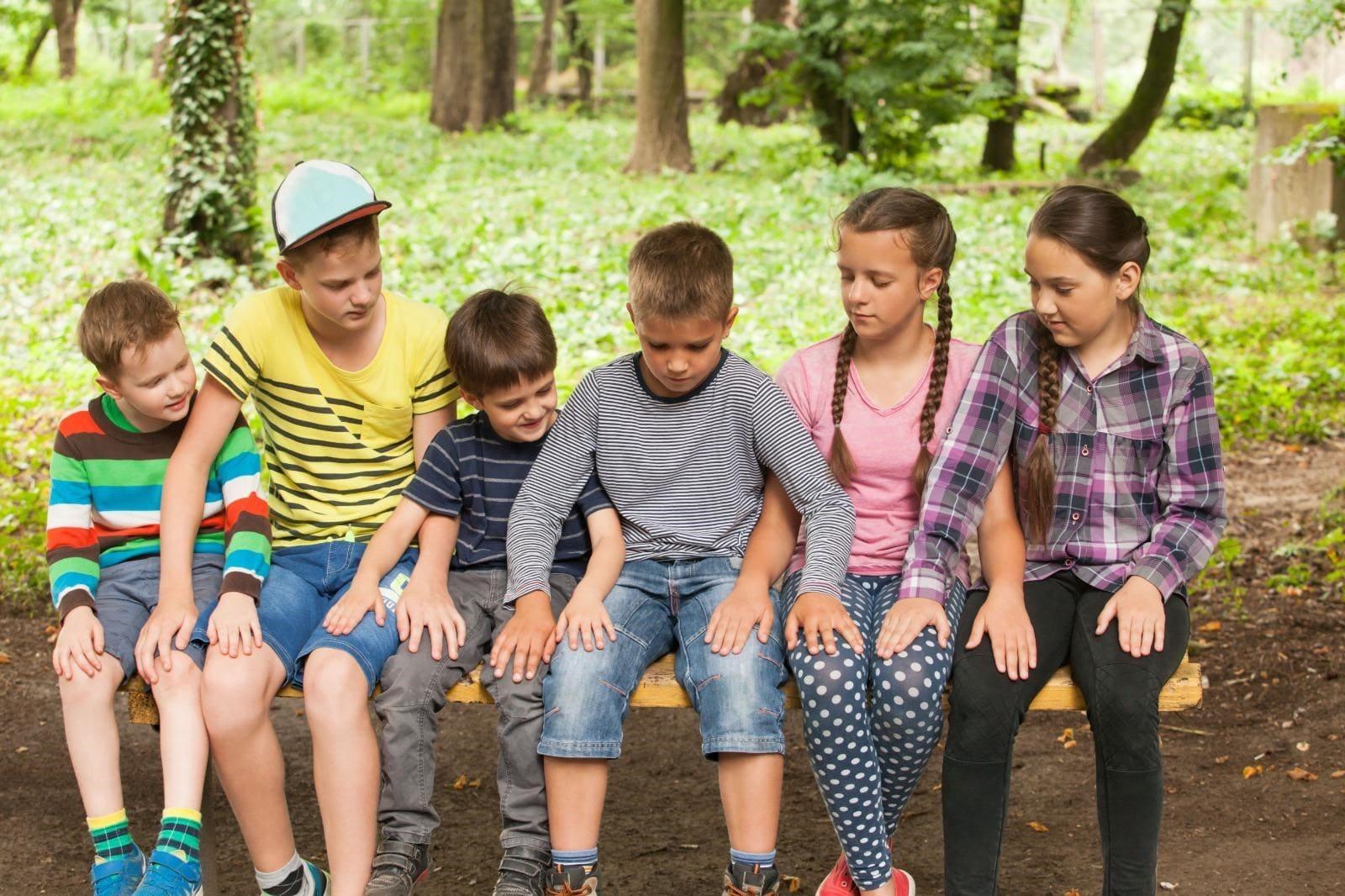
Camp starts with a low-key arrival window. No lineups. No whistles. Kids check in, drop their bags, and settle into a “free choice” zone where they can draw, chat, or play with equipment that’s already set out. This transition period matters more than most parents realize.
Kids arrive in different states. Some are excited and bouncing. Others are groggy or nervous, especially during the first week. A gradual, unpressured start lets every child land at their own pace before the day picks up energy.
Coaches greet each kid by name. For younger campers (ages 4 to 6), this one-on-one hello is the anchor that makes the rest of the day feel safe.
The Morning Fitness Block (9:00 to 10:15 AM)
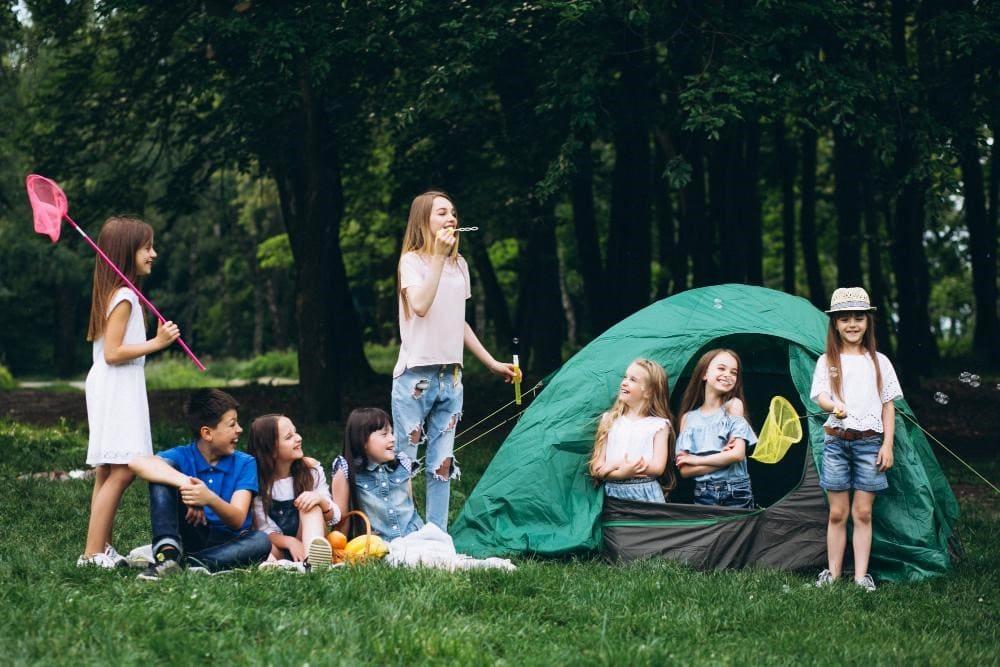
This is the highest-energy part of the day, and it comes first on purpose.
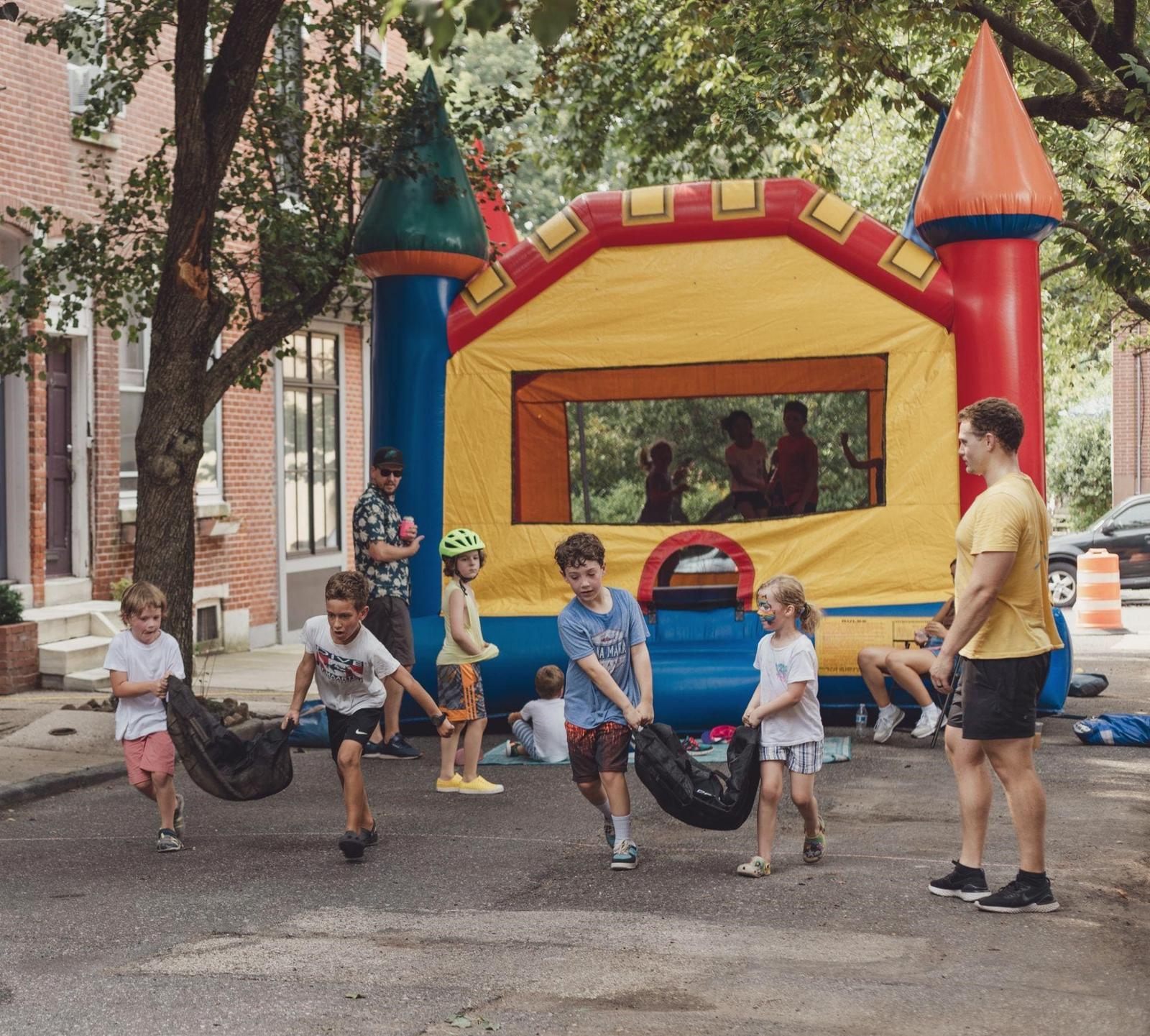
Kids have been sitting in a car or eating breakfast. Their bodies are ready to move. The morning fitness block channels that energy through structured games that sneak in real exercise: relay races, obstacle courses, bodyweight challenges, agility drills, and team-based competitions. Think capture the flag, but designed so every kid is sprinting, jumping, and crawling, not standing around waiting for a turn.
The summer camp activities list here changes daily. Monday might be an obstacle course relay. Tuesday could be a team scavenger hunt through Rittenhouse Square park that includes bear crawls, frog jumps, and crab walks between stations. Wednesday might focus on partner challenges where kids hold planks, do wheelbarrow walks, or compete in timed agility circuits.
A few things set this apart from the “run around and tire them out” approach:
- Every game has a built-in fitness goal (cardiovascular endurance, coordination, or muscular strength), even if the kids just think they’re playing.
- Activities scale by age group. A 5-year-old and an 11-year-old aren’t doing the same version of the same game.
- Coaches rotate between encouraging effort and teaching technique. Kids learn how to land a jump, brace their core during a crawl, and pace themselves during a longer run.
By 10:15, every camper has hit at least 30 minutes of moderate-to-vigorous physical activity. That’s half the CDC’s daily recommendation before mid-morning snack.
Snack and Hydration Break (10:15 to 10:30 AM)
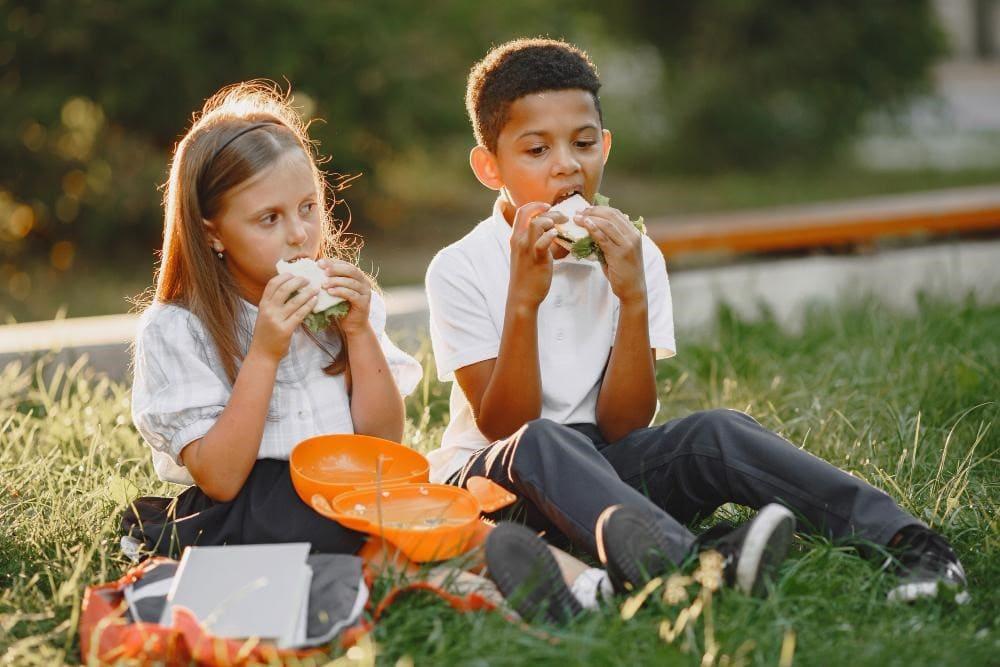
Fifteen minutes. Water, a snack from home, and a breather. Coaches use this time to check in with kids who might be struggling socially or physically. It’s also when friendships form. Some of the best summer camp experiences happen during these unstructured pockets.
The Yoga Block (10:30 to 11:15 AM)
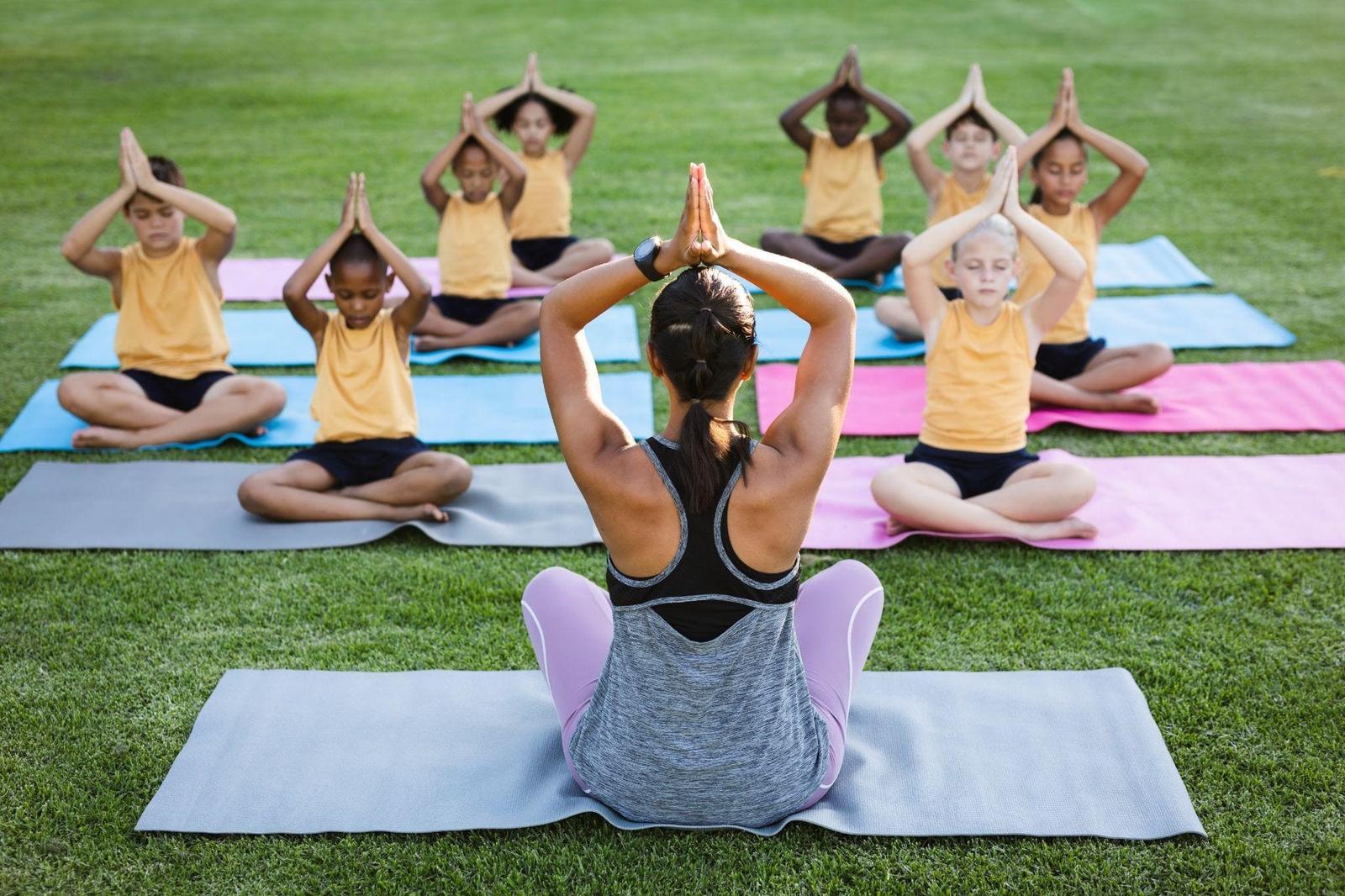
Here’s where the Fitfulness approach gets interesting. After 75 minutes of high energy, the daily camp schedule shifts gears completely.
Yoga follows fitness for a specific physiological reason: when kids exercise hard, their heart rate elevates and their sympathetic nervous system (the “fight or flight” system) activates. Yoga brings them back down. It activates the parasympathetic response, the “rest and recover” side. This isn’t wellness jargon. It’s how the body works. And kids feel the difference, even if they can’t explain it.
The yoga block includes:
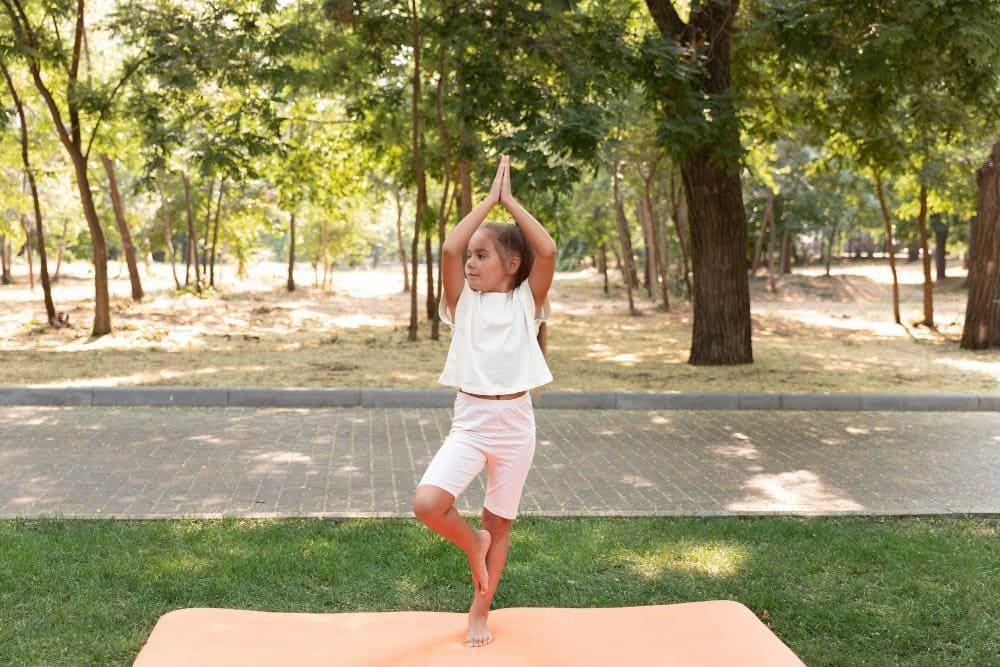
- Active flow sequences (sun salutations, warrior poses, balance challenges like tree pose and eagle pose) to maintain engagement while shifting from high intensity to controlled movement
- Partner and group poses where kids work together to hold formations. These build trust, body awareness, and a lot of laughing.
- Breath control (pranayama) exercises woven between poses. Kids learn box breathing, belly breathing, and counted exhales. These aren’t abstract concepts for them. They’re tools that show up later in the day when someone gets frustrated during a game or overwhelmed during a group activity.
Yoga sessions adapt by age. Younger campers (4 to 6) do animal-themed poses, story-based yoga, and balance games. Older campers (7 to 12) work on more traditional asanas with alignment cues, longer holds, and sequences they memorize over the course of the week.
If you’re wondering whether kids actually stay focused during yoga at camp, the answer is yes, especially after the fitness block. Their bodies are primed for it. You wouldn’t start the day with yoga (too much pent-up energy). But after an hour of running and jumping? Kids settle into it naturally.
Meditation and Stillness (11:15 to 11:35 AM)
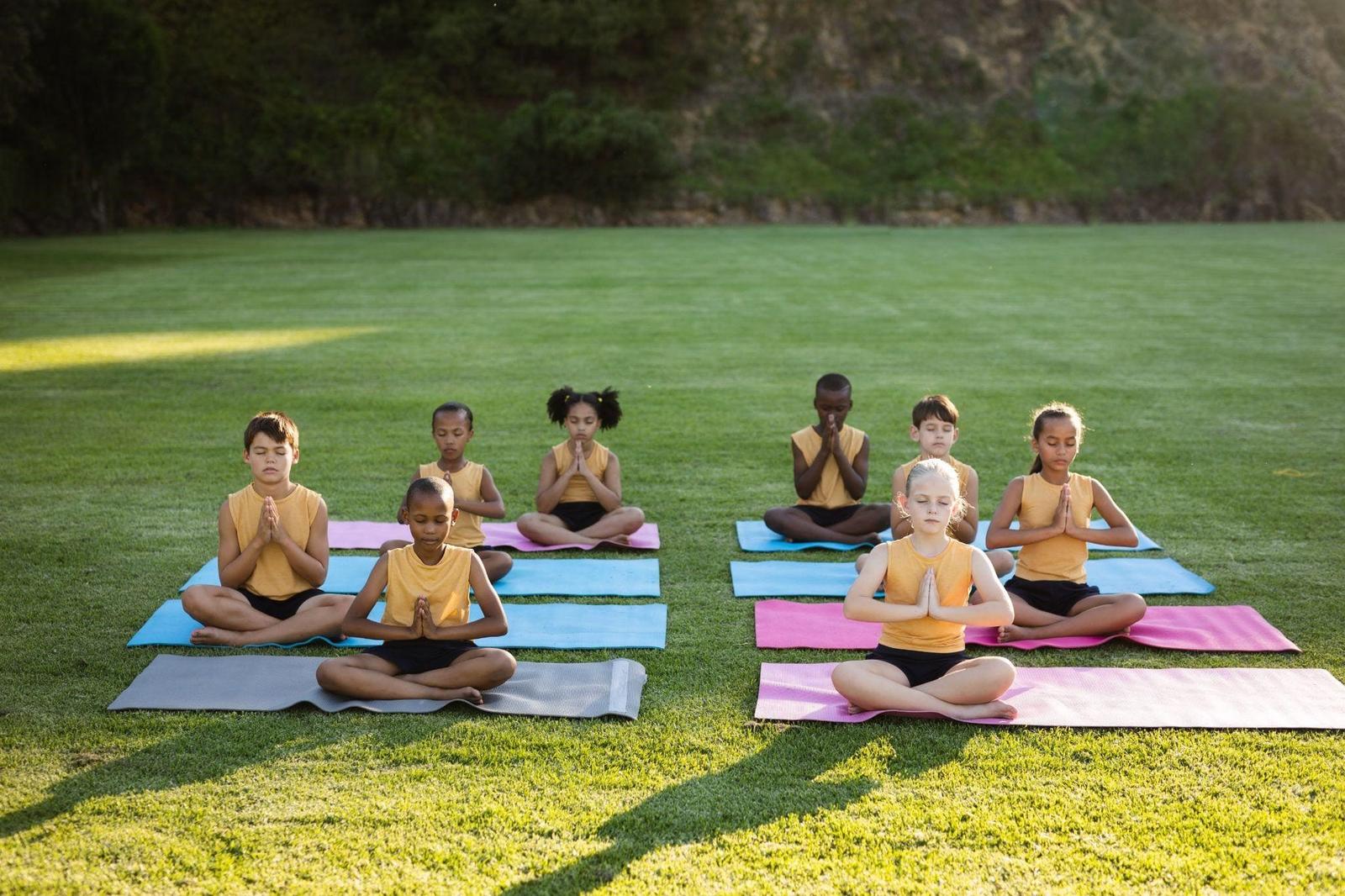
This is the part that surprises parents most.
Meditation comes last in the Fitfulness sequence because it requires the deepest level of calm. Fitness burns the physical energy. Yoga regulates the nervous system. Meditation asks kids to sit with themselves, notice their thoughts, and practice being still.
At Fitfulness, meditation for kids isn’t sitting cross-legged in silence for 20 minutes. It’s guided. Coaches lead body scans (“notice your feet on the floor, notice your hands in your lap”), breath awareness exercises (“count your breaths to ten, then start over”), and short guided visualizations.
The length scales by age. A 4-year-old might meditate for three to five minutes. An 8-year-old can handle seven to ten. By the end of a two-week camp session, most kids have noticeably extended their capacity to sit still and focus. Parents notice this at home, too.
Pete vonGlatz Nicholson, who founded Yous and designed the Fitfulness curriculum, brings a background in Vipassana meditation (10-day silent retreats) and Iyengar yoga to the way these sessions are structured. The techniques are simplified for kids, but the principles are the same ones used in serious adult practice. That depth is what separates a Fitfulness camp from a traditional day camp that tacks on five minutes of “quiet time.”
Lunch and Free Play (11:35 AM to 12:30 PM)

Kids eat lunch (brought from home), then get free play time. This unstructured period is intentional. After a full morning of guided activity, kids need time to be kids: make up their own games, negotiate rules with each other, or just sit and talk.
Free play also gives coaches a window to observe social dynamics. Who’s being left out? Who’s dominating every game? These observations shape how teams and partners get organized in the afternoon.
Afternoon Activity Rotation (12:30 to 2:00 PM)
The afternoon block rotates through a mix of fun camp activities that complement the morning’s focus. Depending on the day, this might include:
- Creative movement (dance games, freeze challenges, rhythm-based activities)
- Team-building challenges (problem-solving games that require communication, not just speed)
- Nature-based activities in nearby Philadelphia parks like Rittenhouse Square or along the Schuylkill River Trail
- Journaling and gratitude practice (older campers write or draw about their day; younger ones share aloud)
- Water play and outdoor games when the weather cooperates
The afternoon is lower intensity than the morning on purpose. Kids are naturally less energized after lunch, and the summer camp routine accounts for that. You don’t schedule relay races at 1:00 PM in July. You schedule activities that keep kids engaged without draining what’s left in the tank.
Cool-Down and Closing Circle (2:00 to 2:30 PM)
Every day ends the way it started: with intention. The closing circle brings the whole group together for a short yoga cool-down, a final breathing exercise, and a group share. Each kid names one thing they’re proud of from the day or one thing they noticed about themselves.
This sounds small. It isn’t. Practicing mindfulness exercises like this teaches emotional regulation, gratitude, and self-awareness in a format that doesn’t feel like a lesson. It feels like the end of a good day.
Why the Order Matters: Fitness, Then Yoga, Then Meditation
If there’s one thing to take away from this breakdown, it’s that the Fitfulness summer camp routine isn’t just a list of activities arranged by convenience. The sequence, fitness first, yoga second, meditation third, follows how kids’ bodies and brains actually respond to movement.
High-intensity activity burns off excess energy and activates the cardiovascular system. Yoga brings the heart rate down and shifts the nervous system toward recovery. Meditation builds on that calm state to train attention, breath awareness, and emotional regulation.
This isn’t a theory. The American Academy of Pediatrics recommends at least 60 minutes of daily moderate-to-vigorous activity for kids ages 6 and up. The CDC’s school health guidelines support integrating physical activity with social-emotional learning. Fitfulness does both in every single session.
When parents tell us their kid seems calmer, sleeps better, or handles frustration differently after a week of camp, that’s not an accident. It’s the routine doing what it’s designed to do.
What Makes This Different From Other Summer Camps
A lot of summer camps in Philadelphia offer sports, arts, or general recreation. Those are fine programs. But most of them treat physical activity and emotional wellness as separate things, if they address emotional wellness at all.
Fitfulness treats them as one thing. Every fitness game builds physical literacy (agility, coordination, cardiovascular endurance). Every yoga session builds body awareness and flexibility. Every meditation builds focus and self-regulation. And because these happen in sequence, inside the same class, kids experience the full arc from high energy to total stillness. They learn what it feels like to bring themselves down from an excited state. That’s a skill most adults are still working on.
No other program in Philadelphia combines cross-training, yoga, and meditation into a single kids’ camp experience. That’s not a marketing line. It’s just a fact about what’s available.
Who This Camp Is Best For
Fitfulness summer camps work well for a wide range of kids, but they’re especially good for:
- High-energy kids who need more than passive activities to stay engaged
- Anxious or shy kids who benefit from yoga, breath work, and the non-competitive structure
- Kids who don’t love traditional sports but still need to move their bodies
- Any child ages 4 to 12 whose parents want them building physical and emotional skills over the summer, not just passing time
If you’re still weighing options, our guide on choosing the right summer camp for an active kid walks through the questions worth asking any program. And if you want to see the full details on dates, pricing, and locations for this summer, the Fitfulness summer camp page has everything.
Your kid deserves a summer where they come home sweaty, smiling, and just a little more able to sit still at dinner. That’s what a good summer camp routine can do.