A four-year-old at our camp sat with her eyes closed for twelve minutes last summer. No fidgeting. No checking to see if it was over yet. Just breathing.
Her parents had told us at drop-off that she “couldn’t sit still for a thirty-second time-out at home.”
This isn’t a trick. The benefits of meditation for kids are well-documented, but the part nobody talks about is the setting that makes it actually stick. Summer camp turns out to be one of the best environments on earth for teaching kids to meditate, which is why it’s a core part of how we run our fitness and mindfulness summer camps. Not because we’re trying to make tiny monks. Because the structure of camp removes almost every barrier that usually keeps meditation from working with children.
What does meditation actually do for kids?
Quick answer: Regular meditation practice in children has been linked to improved focus, lower anxiety, better sleep, and stronger emotional regulation. The American Academy of Pediatrics now lists mindfulness among the evidence-based tools for kids managing stress, and a growing body of peer-reviewed research has tied consistent mindfulness practice in school-age children to measurable improvements in attention and executive function.
The mindfulness for kids benefits parents notice most often are practical: a kid who pauses before reacting, falls asleep faster, recovers from frustration without spiraling. These aren’t soft outcomes. They show up in classroom behavior, sibling fights, and how a kid handles the stuff they used to find overwhelming.
Why camp works better than home for teaching meditation
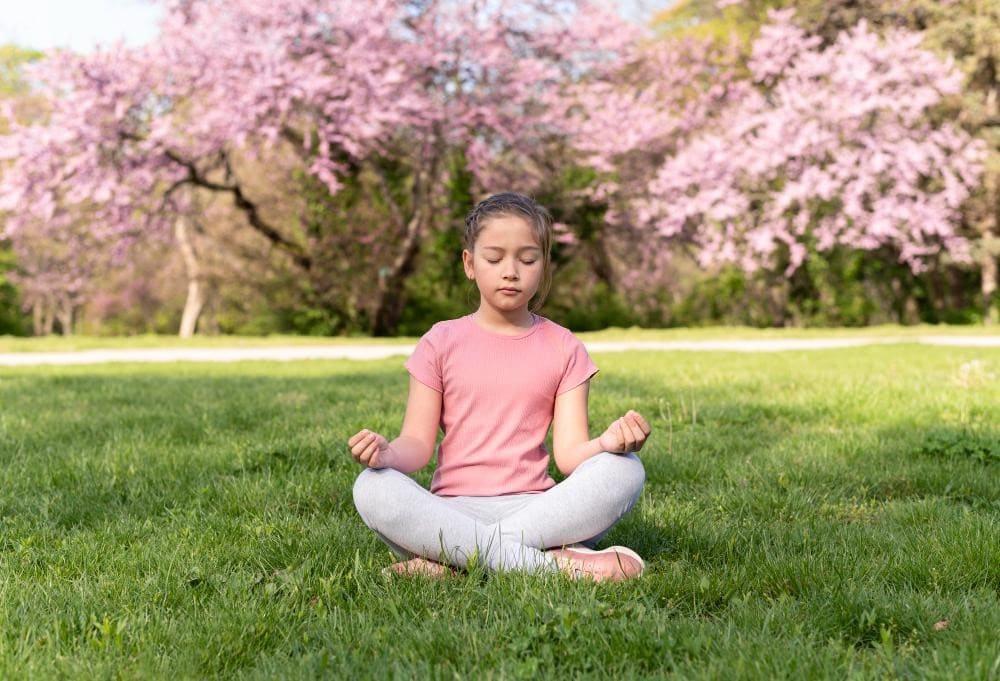
Most parents who try meditation with their kids at home hit the same wall. The kid won’t sit still. The dog walks in. A sibling makes a noise. Three minutes feels like thirty. So it gets dropped.
Camp removes those barriers. It’s one of the underrated benefits of structured summer camp programs for active kids: the environment does the work that willpower can’t. Here’s why it works.
Kids learn it together, not alone
When a kid sees fifteen other kids closing their eyes and breathing, social proof does most of the work. Meditation stops being a weird thing the parents are making them do. It becomes what everyone is doing. Group practice is one of the oldest tools in any meditation tradition for a reason.
The body is already tired
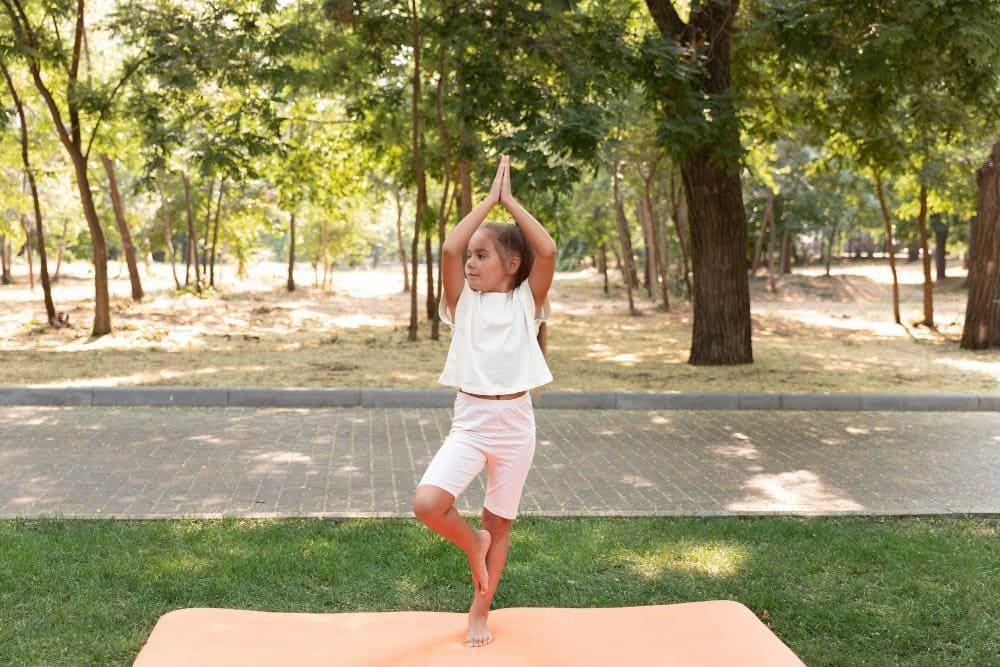
This is the part most home meditation attempts miss. We always run meditation after fitness games and yoga, in that exact order. By the time kids sit down for the meditation portion, their bodies have burned through the wiggle. Stillness becomes a relief instead of a punishment. This sequencing is the single biggest reason meditation for children benefits stick at camp in a way they often don’t in a living room.
Time is built in
At home, meditation is something you have to remember to do, then defend against everything else demanding your attention. At camp, it’s on the schedule. Every day. Same time. Same place. That repetition is what builds the actual practice. Two minutes a day, every day for two weeks, will do more for a kid’s nervous system than a single thirty-minute session ever could.
A coach who actually practices
Kids can tell instantly when an adult is faking it. Our founder Coach Pete spent years studying Iyengar yoga and has done multiple ten-day silent Vipassana meditation retreats. He still maintains a daily personal meditation practice. The coaches who teach meditation at camp don’t perform mindfulness. They live it. Kids pick up on that, even if they can’t articulate it.
What meditation looks like by age at camp
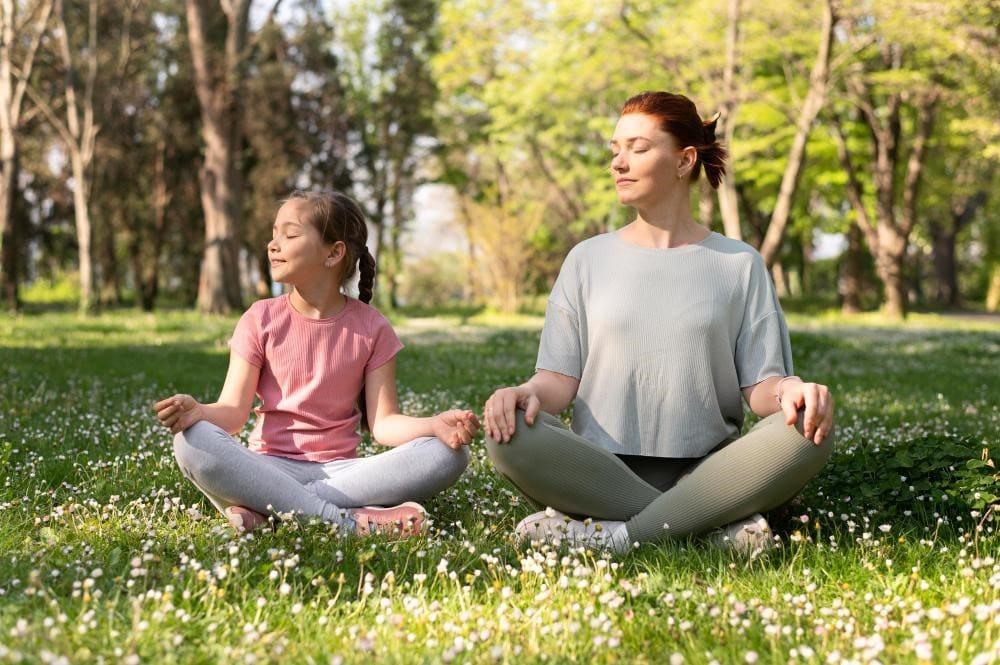
The practice has to match the developmental stage. We don’t ask a four-year-old to do what a twelve-year-old does.
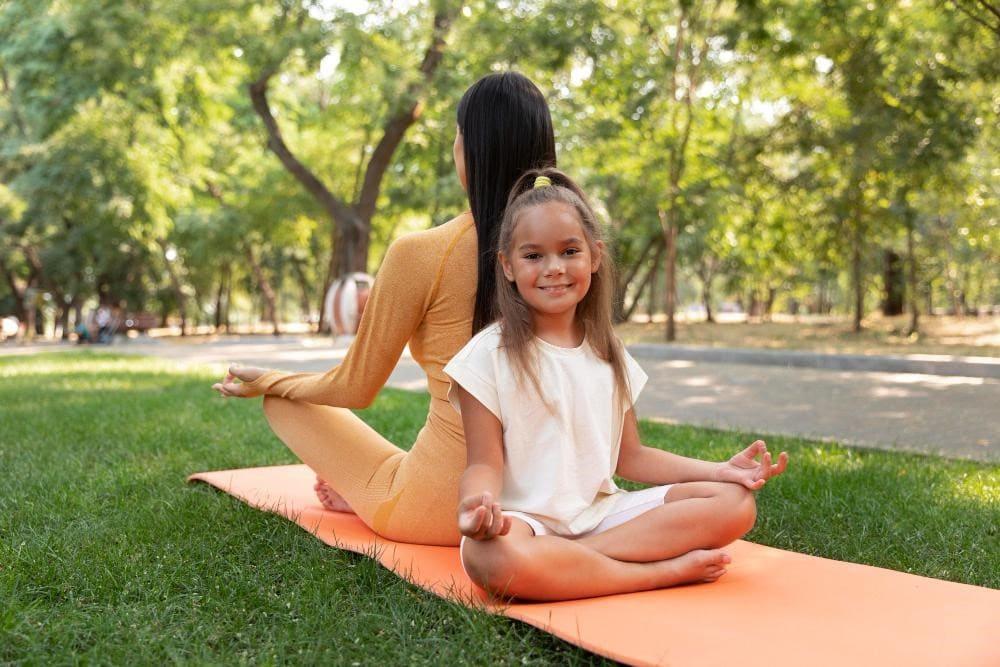
Ages 3 to 5: Two to three minutes of guided breathing, often with a small stuffed animal resting on their belly so they can watch it rise and fall. This is how very young kids learn how meditation helps kids focus before they even know what focus is.
Ages 6 to 9: Five to seven minutes of guided body scan or breath counting. We use simple visualizations, like watching thoughts float by like leaves on a stream.
Ages 10 to 12: Ten to fifteen minutes of mostly silent practice with brief guidance. At this age kids are ready for more structured techniques, including basic breath observation drawn from Vipassana tradition.
The progression matters. A kid who learns three-minute breath awareness at five is ready for ten-minute silent practice by ten. Skip the ramp and you lose them.
What parents notice when kids come home
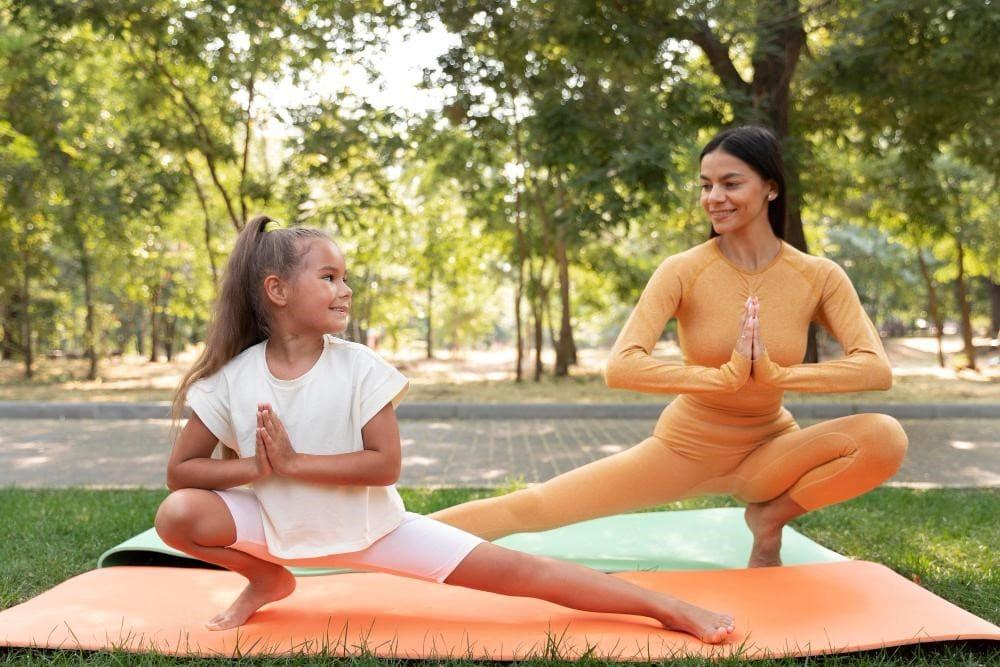
Parents tell us the same things over and over after a few weeks at camp. Kids are sleeping better. Tantrums are shorter. There’s a small pause before the meltdown that wasn’t there before. Some kids start asking to do “the breathing thing” before bed on their own.
These aren’t dramatic transformations. They’re small, real shifts in how a kid handles being a kid. That’s what consistent practice does. For families who want to keep this going beyond camp season, our guide to year-round mindfulness activities for kids in Philadelphia covers techniques that work at home once the foundation is built.
One last thing
You don’t teach kids meditation by lecturing them about it. You teach it by giving them a body that’s ready to be still, a group that’s doing it with them, and an adult who actually practices. Camp gives all three at once. That’s why it works.
If you want a closer look at how meditation fits into the full day, here’s what a typical day at our Fitfulness summer camp looks like, from the morning fitness games through the closing meditation.